The rise of GLP-1 receptor agonists—such as semaglutide (Ozempic/Wegovy) and tirzepatide (Mounjaro/Zepbound)—has revolutionized the treatment of obesity. These medications are incredibly effective at suppressing appetite and slowing gastric emptying, leading to profound weight loss. However, this success comes with a significant biological caveat: the risk of lean muscle mass loss.
Clinical data suggests that without intervention, as much as 25% to 40% of the weight lost on GLP-1s can come from muscle tissue rather than fat. This phenomenon can lead to “sarcopenic obesity,” where a person reaches a healthy weight but possesses low strength and a slowed metabolism. To prevent this, a high-protein nutritional strategy is not just an option—it is a clinical necessity.
The GLP-1 Muscle Paradox
When you are on a GLP-1 medication, you are often in a significant caloric deficit because your brain is receiving constant “fullness” signals. When the body lacks sufficient energy from food, it looks to internal stores. While we want the body to burn fat, it will readily break down muscle tissue for energy if protein intake is insufficient.
Muscle is metabolically active tissue. Losing it lowers your Basal Metabolic Rate (BMR), making it harder to maintain weight loss in the long term. Furthermore, losing muscle contributes to the “Ozempic face” or “Ozempic body” appearance—a sagging effect caused by the loss of structural integrity beneath the skin.
Protein Targets: The “Leucine Threshold”
On a GLP-1 protocol, your protein requirements actually increase even as your appetite decreases. To preserve muscle, most experts recommend a daily intake of 1.2g to 1.5g of protein per kilogram of goal body weight. However, total daily protein is less important than protein distribution. To trigger Muscle Protein Synthesis (MPS), you must hit what is known as the Leucine Threshold. Leucine is an essential amino acid that acts as the “on switch” for muscle building. Usually, this requires consuming 25–40g of high-quality protein in a single sitting.
If you graze on tiny amounts of protein throughout the day (e.g., 5g here and there), you may never hit the threshold required to protect your muscles from breakdown.
Managing Side Effects: Eating When You’re Not Hungry
The greatest challenge of a GLP-1 is “anorexia-like” symptoms where the thought of food—especially heavy meats—becomes unappealing. Gastric emptying is slowed, meaning food stays in your stomach longer.
Easy-to-Digest Protein Sources
To meet your goals without feeling nauseous, prioritize “soft” or liquid proteins:
- Whey Protein Isolate: Rapidly digested and high in leucine.
- Greek Yogurt or Skyr: Provides probiotics for gut health along with high protein density.
- Low-Fat Cottage Cheese: Rich in casein, which provides a slow release of amino acids.
- Egg Whites: Very low volume but high biological value.
- White Fish or Tofu: Much easier on a slow-moving digestive tract than a heavy steak or fibrous pork.
The Sample “100g+ Protein” Meal Plan
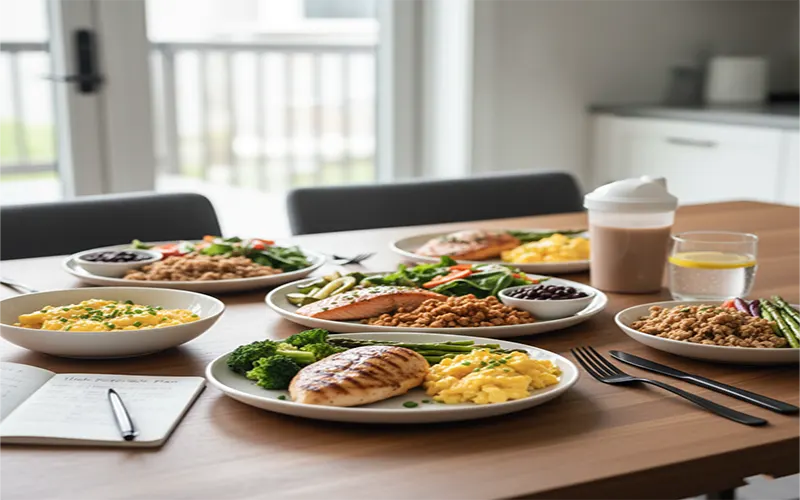
This plan is designed for someone with a suppressed appetite, focusing on high-density, low-volume meals.
Breakfast: The “Pro-Coffee” or Shake (30g Protein)
- Option: 1 scoop of whey protein mixed into cold-brew coffee or a smoothie with 1 cup of Greek yogurt and a handful of berries.
- Why: Starting the day with 30g of protein “breaks” the overnight fasted state and halts muscle catabolism.
Lunch: The Power Bowl (35g Protein)
- Option: 4oz of shredded chicken breast or canned tuna mixed with a tablespoon of avocado oil mayo, served over a small bed of greens.
- Why: Shredded or canned meats are often tolerated better than whole fillets when gastric emptying is slow.
Afternoon Snack: The Bridge (15g Protein)
- Option: One individual container of low-fat cottage cheese or two hard-boiled eggs.
- Why: Keeps amino acids circulating in the bloodstream during the long gap between lunch and dinner.
Dinner: Light & Lean (30g Protein)
- Option: 5oz of baked cod or tofu steaks with a side of steamed asparagus.
- Why: White fish and plant proteins are “light” on the stomach, reducing the risk of nighttime acid reflux—a common GLP-1 side effect.
Daily Total: 110g Protein
Protein Hacks for Nausea Days
There will be days, particularly right after your weekly injection, when eating a meal feels impossible. Use these strategies to stay on track:
- Liquid First: If you can’t chew, drink. Clear protein waters (like Isopure) provide 20g of protein in a refreshing, juice-like format.
- Collagen Boost: While collagen is not a complete protein for muscle building, adding it to tea or soup provides extra amino acids that support skin elasticity during rapid weight loss.
- The “Two-Bite” Rule: Even if you aren’t hungry, aim for two bites of the protein source on your plate every 30 minutes.
- Avoid High Fat with Protein: GLP-1s make fat digestion difficult. Pairing a high-protein food with high fat (like a greasy burger) is a recipe for gastrointestinal distress. Keep your protein lean.
The Synergy: Protein + Resistance Training
It is a common myth that eating protein alone will save your muscles. Protein provides the building blocks, but resistance training provides the signal.
When you lift weights or perform bodyweight exercises, you create micro-tears in the muscle fibers. This “mechanical tension” signals the body to use the protein you’ve eaten to repair and reinforce the muscle. Without this signal, the body may still choose to shed muscle tissue to save energy, regardless of how much chicken you eat.
Recommendation: Aim for at least two to three days of strength training per week, focusing on compound movements like squats, rows, and presses.
Protecting Your Metabolic Future
Weight loss on a GLP-1 medication is a marathon, not a sprint. While the scale moving down is exciting, the quality of that weight loss determines your health for the next twenty years. By prioritizing 30g of protein at every meal, choosing easily digestible sources, and incorporating strength training, you ensure that the “new you” is not just smaller, but stronger and more metabolically resilient.