
Budget-Friendly Plant-Based Protein Sources with Complete Amino Acids

Budget-Friendly Plant-Based Protein Sources with Complete Amino Acids

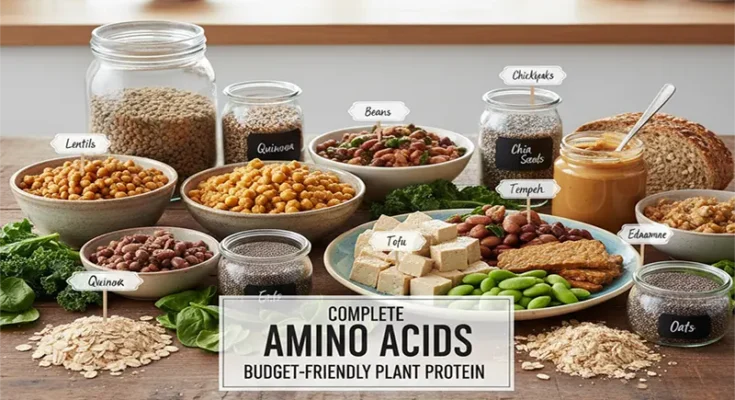
For years, a persistent myth has circulated in the world of nutrition: that plant-based proteins are “incomplete” and therefore inferior for building muscle or maintaining health. This misconception often leads people to believe that a high-protein diet requires expensive cuts of meat or pricey supplements.

The reality is far more encouraging. While it is true that many plants are low in one or two specific amino acids, your body is incredibly efficient at pooling amino acids from different foods throughout the day. By strategically pairing affordable, shelf-stable ingredients, you can easily obtain all nine essential amino acids (EAAs) while significantly lowering your grocery bill.

The Science of “Complete” Protein

Proteins are made up of 20 amino acids. Eleven of these are produced by our bodies, but nine are “essential,” meaning we must get them from our diet. A complete protein is simply a food source that contains all nine of …

Budget-Friendly Plant-Based Protein Sources with Complete Amino Acids Read More
The Exit Strategy: Safe Transition Plans for Patients Using GLP-1 for Metabolic Reset

The Exit Strategy: Safe Transition Plans for Patients Using GLP-1 for Metabolic Reset

The introduction of GLP-1 receptor agonists has revolutionized the treatment of obesity and metabolic dysfunction. For many, these medications serve as a “metabolic reset,” silencing “food noise,” improving insulin sensitivity, and allowing for significant weight loss. However, a critical question remains: What happens when the medication stops?

Without a structured “Exit Strategy,” many patients face a biological rebound. The body, sensing a period of perceived starvation, may respond with hyperphagia (intense hunger) and a slowed metabolic rate. A safe transition is not about “testing your willpower”; it is about building a physiological and behavioral framework—lifestyle scaffolding—that supports your new metabolic set point once the pharmacological assistance is removed.

1. The Biological Challenge: Managing the Rebound

When you stop a GLP-1 medication, the synthetic hormones that suppressed your appetite and slowed your gastric emptying begin to fade. Your body’s natural hunger hormones, specifically ghrelin, often surge. Simultaneously, your brain’s sensitivity …

The Exit Strategy: Safe Transition Plans for Patients Using GLP-1 for Metabolic Reset Read More
Hidden Ingredients to Avoid in Ultra-Processed 'Healthy' Foods

Hidden Ingredients to Avoid in Ultra-Processed ‘Healthy’ Foods

Walk into any modern grocery store, and you are greeted by a sea of “clean” labels. Boxes are emblazoned with terms like Non-GMO, Plant-Based, Gluten-Free, and Organic. This is known as the “Health Halo” effect—a marketing strategy designed to make consumers believe a product is inherently good for them based on a single virtuous attribute.

However, if you turn the package over and look past the bold claims, you often find a list of industrial substances that bear little resemblance to real food. Many of these products are Ultra-Processed Foods (UPFs): formulations of food-derived substances combined with additives to make them shelf-stable and hyper-palatable. To protect your metabolic health, you must learn to spot the hidden ingredients that undermine even the most “healthy” looking snacks.

1. The Texture Manipulators: Emulsifiers and Gums

In the world of “healthy” plant milks, protein shakes, and gluten-free breads, …

Hidden Ingredients to Avoid in Ultra-Processed ‘Healthy’ Foods Read More