For years, a persistent myth has circulated in the world of nutrition: that plant-based proteins are “incomplete” and therefore inferior for building muscle or maintaining health. This misconception often leads people to believe that a high-protein diet requires expensive cuts of meat or pricey supplements.
The reality is far more encouraging. While it is true that many plants are low in one or two specific amino acids, your body is incredibly efficient at pooling amino acids from different foods throughout the day. By strategically pairing affordable, shelf-stable ingredients, you can easily obtain all nine essential amino acids (EAAs) while significantly lowering your grocery bill.
The Science of “Complete” Protein
Proteins are made up of 20 amino acids. Eleven of these are produced by our bodies, but nine are “essential,” meaning we must get them from our diet. A complete protein is simply a food source that contains all nine of these in adequate proportions.
In the plant world, the “limiting amino acids” are usually Lysine (often low in grains) and Methionine (often low in legumes). When you eat a grain and a legume together—or even just during the same day—their amino acid profiles “complement” each other, creating a complete protein profile that the body can use for tissue repair and enzyme production.
1. The Naturally Complete Powerhouses
Before we even look at combinations, several plant foods are complete all on their own. Despite their “superfood” reputation, many of these are very budget-friendly when bought in bulk.
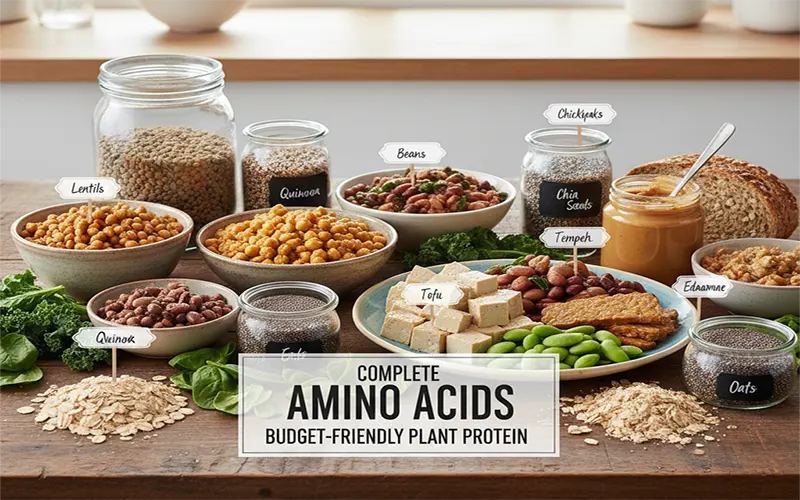
- Soy (Tofu, Tempeh, and Edamame): Soy is the gold standard of plant protein. It contains all nine EAAs and is highly digestible. A block of extra-firm tofu often costs less than $2.00 and provides roughly 40g of protein.
- Buckwheat: Despite the name, buckwheat is gluten-free and not a grain (it’s a seed). It is a complete protein and highly affordable when bought as “kasha” or groats.
- Quinoa: While slightly more expensive than rice, quinoa is a complete protein that cooks in just 15 minutes. Buying it in the bulk section of your grocer significantly reduces the price per pound.
2. The Gold Standard Pairings (Grain + Legume)
The most famous budget-friendly protein strategy is the pairing of a grain with a legume. These pairings are found in almost every traditional culture because they provide a robust nutritional foundation for pennies.
Rice and Beans
This is perhaps the most famous pairing in the world. Rice is low in lysine but high in methionine; beans are high in lysine but low in methionine. Together, they create a protein profile similar to that of meat.
- The Math: 1 cup of cooked black beans + 1 cup of brown rice provides approximately 22g of protein.
- Budget Tip: Buy dry beans in large bags. One pound of dry beans costs about $1.50 and yields roughly six to seven cups of cooked beans.
Whole Wheat and Lentils
Lentils are the “workhorse” of the plant-based world. They cook much faster than beans and don’t require soaking. Pairing a lentil soup with a slice of whole-wheat bread or a whole-wheat pita creates a complete protein.
- The Math: A large bowl of lentil dahl with a whole-wheat flatbread can provide 18g to 25g of protein.
3. Unexpected Complete Proteins
Peanut Butter on Whole Grain Toast
Many people view peanut butter as a fat source, but it is surprisingly high in protein. Peanuts are legumes, and when spread on whole-grain bread, the amino acid profiles complete each other.
- The Math: Two slices of whole-grain bread with two tablespoons of peanut butter offer about 12g to 15g of protein. This is one of the cheapest “emergency” complete proteins available.
Hummus and Pita
Chickpeas (the base of hummus) and sesame seeds (tahini) combined with a wheat-based pita create a complete protein profile.
- The Math: This snack provides roughly 8g to 10g of protein and is an excellent option for maintaining focus during the day.
4. Maximizing Protein Absorption (Bioavailability)
Plant proteins are wrapped in fiber and “antinutrients” like phytates, which can slightly hinder absorption. To get the most “bang for your buck,” use these three simple techniques:
- Soaking: Soaking dry beans and grains for 8–12 hours before cooking neutralizes phytates and makes the protein more bioavailable.
- Vitamin C: Pairing plant proteins (like lentils) with Vitamin C (like a squeeze of lemon or bell peppers) increases the absorption of non-heme iron, which often goes hand-in-hand with plant protein.
- Sprouting: If you have the time, sprouting lentils or mung beans significantly increases their nutrient density and protein digestibility.
The “One-Day” Budget Protein Menu
Here is how you can get over 60g of complete plant protein in a single day for under $5.00:
| Meal | Ingredients | Estimated Protein |
| Breakfast | Oatmeal with flaxseeds and a spoonful of peanut butter. | 14g |
| Lunch | Lentil soup with two slices of whole-wheat toast. | 20g |
| Dinner | Tofu stir-fry with broccoli and brown rice. | 26g |
| Total | 60g |
Cost-Efficiency Tips for the Plant-Based Shopper
- Bulk is King: The price difference between a 1lb bag and a 5lb bag of rice or lentils can be as much as 50% per ounce.
- Avoid “Vegan” Processed Foods: Pre-made vegan “meats” and frozen meals are where the costs skyrocket. Stick to the “Single Ingredient” staples (dry beans, tofu, grains) to keep your budget intact.
- Use Frozen Vegetables: Frozen peas and edamame are incredibly high in protein compared to other vegetables and are often cheaper than fresh produce because they have zero waste and a long shelf life.
Building a healthy, high-protein body does not require a massive financial investment. By returning to the foundational staples of human nutrition—beans, grains, seeds, and soy—you can satisfy all your essential amino acid requirements for a fraction of the cost of animal products.
Plant-based protein isn’t just a “substitute” for meat; it is a fiber-rich, cholesterol-free, and budget-friendly way to support your long-term health. Start with a bag of dry lentils and a bag of brown rice, and you are already halfway to a complete metabolic foundation.