
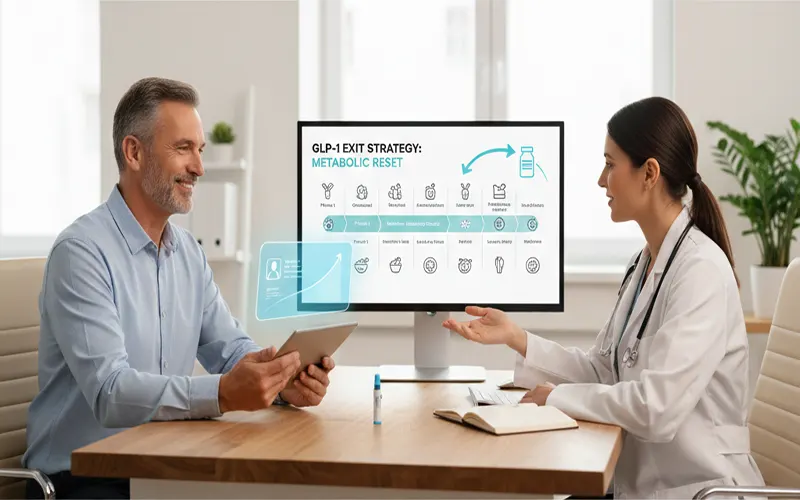
The introduction of GLP-1 receptor agonists has revolutionized the treatment of obesity and metabolic dysfunction. For many, these medications serve as a “metabolic reset,” silencing “food noise,” improving insulin sensitivity, and allowing for significant weight loss. However, a critical question remains: What happens when the medication stops?
Without a structured “Exit Strategy,” many patients face a biological rebound. The body, sensing a period of perceived starvation, may respond with hyperphagia (intense hunger) and a slowed metabolic rate. A safe transition is not about “testing your willpower”; it is about building a physiological and behavioral framework—lifestyle scaffolding—that supports your new metabolic set point once the pharmacological assistance is removed.
1. The Biological Challenge: Managing the Rebound
When you stop a GLP-1 medication, the synthetic hormones that suppressed your appetite and slowed your gastric emptying begin to fade. Your body’s natural hunger hormones, specifically ghrelin, often surge. Simultaneously, your brain’s sensitivity to leptin (the fullness hormone) may not have fully recalibrated.
To manage this, the transition must be viewed as a 6-to-12-month process of “Metabolic Coaching.” The goal is to move from exogenous (medication-provided) GLP-1 to endogenous (self-produced) GLP-1 stimulation.
2. The Tapering Phase: A Physician-Led Descent
One of the most common mistakes is a “cold turkey” cessation. Abruptly stopping high-dose GLP-1s can lead to a rapid return of appetite that overwhelms the patient’s newly formed habits.
- The Slow Taper: Work with your physician to gradually reduce the dosage over several months. This allows your digestive system to slowly regain its natural rhythm of gastric emptying.
- Maintenance Dosing: Some patients benefit from a “maintenance dose” (the lowest effective dose) for an extended period before complete cessation. This “step-down” approach provides a safety net while the patient solidifies their nutritional and exercise foundations.
3. The Protein-Muscle Anchor: Protecting Your BMR
The greatest risk during GLP-1 therapy is the loss of lean muscle mass alongside fat. Muscle is your metabolic sink; it is the primary tissue responsible for burning glucose and maintaining your Basal Metabolic Rate (BMR). If you lose muscle while on the medication, your metabolism will be significantly slower when you come off, making weight regain almost inevitable.
- Resistance Training is Non-Negotiable: During and after the transition, you must engage in strength training at least 3 days per week. This sends a signal to the body to preserve muscle tissue even in a calorie-neutral state.
- The Protein Threshold: To combat “anabolic resistance,” aim for 1.2g to 1.5g of protein per kilogram of body weight. Protein has a high thermic effect and is the most satiating macronutrient, helping to suppress the post-medication ghrelin surge.
4. Microbiome Reconstruction: Stimulating Natural GLP-1
Your L-cells in the distal ileum and colon naturally produce GLP-1 in response to specific nutrients. A “Safe Transition” involves optimizing your diet to stimulate this natural production.
- Fiber as a Bio-identical Signal: Fermentable fibers (prebiotics) are broken down by gut bacteria into Short-Chain Fatty Acids (SCFAs) like butyrate. Butyrate directly stimulates the release of your body’s own GLP-1.
- Specific Foods: Focus on legumes, leeks, garlic, oats, and cruciferous vegetables.
- Bitter Compounds: Bitter flavors (found in arugula, radicchio, and dark coffee) can trigger bitter taste receptors in the gut that also stimulate GLP-1 secretion.
5. The Monitoring Protocol: Tracking Success
Weight is a lagging indicator. To ensure a safe transition, you must track biomarkers that reflect your internal metabolic health.
| Marker | Why it Matters | Goal |
| Fasting Insulin | Shows how hard your pancreas is working. | Lower is better (< 8 uIU/mL). |
| Waist-to-Height Ratio | A better indicator of visceral fat than BMI. | Maintain below 0.5. |
| HbA1c | Your 3-month blood sugar average. | Stability within the healthy range. |
| Grip Strength | A proxy for overall muscle mass and vitality. | No decline during transition. |
6. The Lifestyle Scaffolding: 12-Week Transition Timeline
Month 1: The Nutritional Foundation
Focus on Volume Eating. Since your gastric emptying is speeding up, you will feel “empty” sooner. Use high-volume, low-calorie foods (leafy greens, watery vegetables) to physically distend the stomach and send fullness signals to the brain.
Month 2: The Strength Build
Prioritize progressive overload in the gym. If you weren’t lifting heavy while on the medication, now is the time to start. Muscle gain is the best defense against the “rebound.”
Month 3: Circadian Alignment
Stable blood sugar requires a stable internal clock. Eat your largest meals during daylight hours and maintain a consistent sleep schedule. Sleep deprivation spikes cortisol, which directly counteracts the effects of GLP-1 and drives cravings for ultra-processed foods.
7. Managing “Food Noise” Without Medication
“Food noise”—the intrusive, constant thoughts about eating—often returns after stopping GLP-1s. It is vital to recognize this as a biological signal, not a moral failing.
- Mindful Eating: Slow down and chew thoroughly. It takes 20 minutes for satiety signals to reach the brain.
- Hydration: Thirst is often mistaken for hunger. Drink 16oz of water before every meal.
- The 20-Minute Rule: When a craving hits, wait 20 minutes and engage in a distracting activity. Often, the “noise” will subside once the acute hormonal pulse passes.
Bridging the Gap to Longevity
GLP-1 medications are a powerful bridge, but a bridge must eventually lead to solid ground. A safe transition plan treats the medication as a “training wheels” period, allowing the patient to practice the metabolic habits—high protein, resistance training, and fiber-rich nutrition—that will sustain them for life.
By tapering slowly, prioritizing muscle mass, and healing the gut microbiome, you can turn a temporary “reset” into a permanent transformation. The goal is no longer just weight loss; it is metabolic flexibility—the ability for your body to maintain its health and energy without the need for lifelong pharmaceutical intervention.