In the world of nutrition, “fiber” often suffers from an image problem. It is frequently associated with bland bran cereals and digestive regularity for the elderly. However, modern nutritional science has rebranded fiber as a metabolic powerhouse. Reaching the recommended threshold of 30g per day is not just about “keeping things moving”—it is a fundamental requirement for stabilizing blood sugar, lowering systemic inflammation, and nourishing a microbiome that dictates your metabolic rate.
Despite these benefits, the average adult consumes only about 15g of fiber daily. Closing this “fiber gap” is one of the most effective ways to transform your long-term health.
The Science of 30g: Why the Number Matters
Why 30 grams? While various health organizations offer slightly different ranges, 30g represents a tipping point where we see significant improvements in gut-metabolic health.
The SCFA Connection
When you consume fermentable fiber, it passes undigested through the small intestine and arrives in the colon. Here, your gut bacteria feast on it, producing Short-Chain Fatty Acids (SCFAs), most notably butyrate, propionate, and acetate. These SCFAs are metabolic signaling molecules. They do the following:
- Improve Insulin Sensitivity: SCFAs travel to the liver and muscle tissues, helping your cells respond better to insulin and lowering blood glucose levels.
- Regulate Appetite: Fiber stimulates the release of GLP-1 and PYY—the same hormones targeted by modern weight-loss medications—which signal fullness to the brain.
- Lower Cholesterol: Soluble fiber binds to bile acids in the gut, forcing the body to pull cholesterol from the bloodstream to create more bile.
The “Slow and Steady” Rule: Avoiding the Bloat
One of the biggest mistakes people make is jumping from 10g to 30g of fiber overnight. Your microbiome is like a muscle; if you overload it too quickly, you will experience gas, bloating, and discomfort.
- Titrate Slowly: Add 5g of fiber to your daily total every 3–5 days. This gives your bacterial populations time to adjust.
- Hydrate, Hydrate, Hydrate: Fiber acts like a sponge. Without adequate water, it can actually cause constipation rather than preventing it. Aim for an extra glass of water for every high-fiber meal you add.
- Cook Your Veggies: If you have a sensitive gut, start with cooked vegetables rather than raw salads. Heat breaks down some of the tougher fibers, making them easier to process.
The Four Pillars of Fiber
To hit 30g without feeling like you’re eating “cardboard,” you should diversify your intake across these four categories:
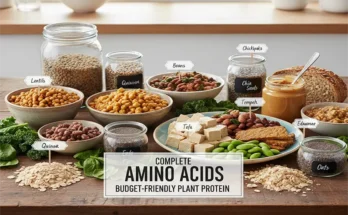
1. Legumes (The Heavy Hitters)
Legumes are the most efficient way to reach your goal.
- Lentils: 8g per half-cup (cooked).
- Black Beans: 7.5g per half-cup.
- Chickpeas: 6g per half-cup.
2. Whole Grains (The Foundation)
Move beyond white rice and processed flour.
- Pearled Barley: 6g per cup.
- Quinoa: 5g per cup.
- Oats: 4g per half-cup (dry).
3. Nuts and Seeds (The Boosters)
These are perfect for adding “hidden” fiber to meals.
- Chia Seeds: 10g per 2 tablespoons (one of the densest sources available).
- Flaxseeds: 2g per tablespoon (ground).
- Almonds: 3.5g per ounce.
4. Fruits and Vegetables (The Micronutrient Source)
- Raspberries/Blackberries: 8g per cup.
- Avocado: 10g per medium fruit.
- Broccoli: 5g per cup (cooked).
A Sample “30g Day” Meal Plan
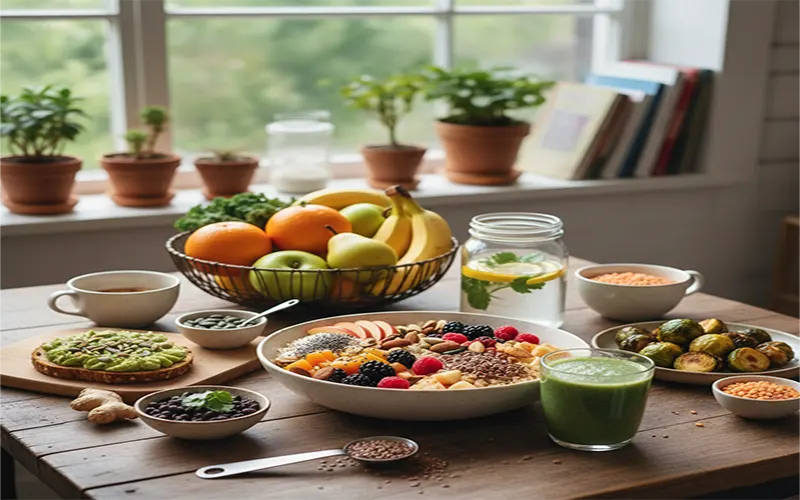
Reaching 30g is easier than it looks when you distribute fiber across every meal. Here is what a high-fiber, metabolically friendly day looks like:
- Breakfast (9g): Overnight oats made with 1/2 cup oats, 1 tbsp chia seeds, and a handful of blueberries.
- Lunch (10g): A large spinach salad with 1/2 cup chickpeas, sliced cucumbers, and half an avocado.
- Snack (4g): An apple with the skin on or a small handful of almonds.
- Dinner (8g): 4oz grilled salmon served with 1/2 cup cooked quinoa and 1 cup of roasted broccoli.
Daily Total: 31g
Pro-Tips for Busy Lifestyles
If you find it difficult to sit down for a formal “health meal,” use these “sneaky” fiber hacks:
- Keep the Skins On: Whether it’s potatoes, carrots, or apples, a significant portion of the fiber is in the peel. Scrub them well and leave the peeler in the drawer.
- The “Lentil Swap”: Replace half of the ground beef in tacos or bolognese with cooked lentils. You’ll barely notice the taste difference, but the fiber count will skyrocket.
- Upgrade Your Pasta: Transition from white wheat pasta to varieties made from chickpeas or red lentils. These often contain 11–15g of fiber per serving compared to the 2g found in traditional pasta.
- Berries Over Bananas: While all fruit is good, berries are the fiber kings. A cup of raspberries has double the fiber of a medium banana with fewer net carbs.
A Long-Term Investment
Reaching 30g of daily fiber is one of the most powerful “low-tech” interventions available for metabolic health. By focusing on whole, plant-based foods and increasing your intake gradually, you aren’t just improving your digestion—you are feeding a complex internal ecosystem that manages your weight, your blood sugar, and your long-term vitality.