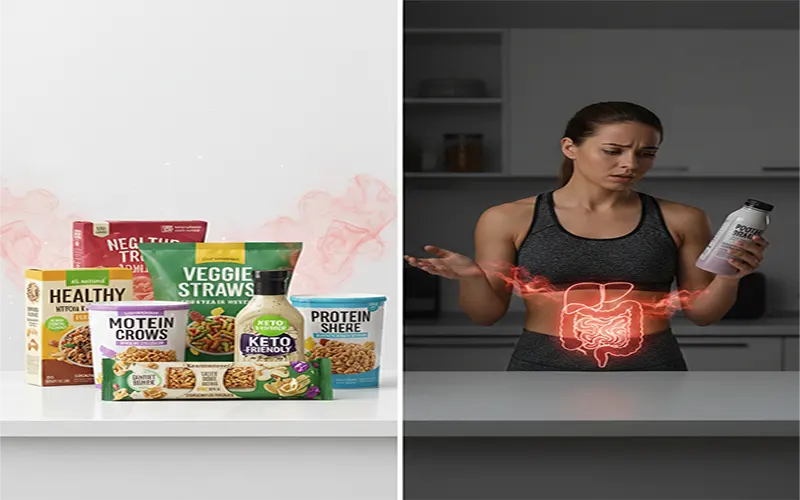
Walk into any modern grocery store, and you are greeted by a sea of “clean” labels. Boxes are emblazoned with terms like Non-GMO, Plant-Based, Gluten-Free, and Organic. This is known as the “Health Halo” effect—a marketing strategy designed to make consumers believe a product is inherently good for them based on a single virtuous attribute.
However, if you turn the package over and look past the bold claims, you often find a list of industrial substances that bear little resemblance to real food. Many of these products are Ultra-Processed Foods (UPFs): formulations of food-derived substances combined with additives to make them shelf-stable and hyper-palatable. To protect your metabolic health, you must learn to spot the hidden ingredients that undermine even the most “healthy” looking snacks.
1. The Texture Manipulators: Emulsifiers and Gums
In the world of “healthy” plant milks, protein shakes, and gluten-free breads, texture is a challenge. Manufacturers use emulsifiers and thickeners to create a creamy mouthfeel or to prevent ingredients from separating.
- The Culprits: Carrageenan, Polysorbate 80, Carboxymethylcellulose (CMC), Xanthan Gum, and Guar Gum.
- The Hidden Risk: While deemed “safe” by regulatory bodies, recent research suggests these compounds act like detergents in the gut. They can break down the protective mucosal layer of the intestines, leading to low-grade inflammation and increased intestinal permeability (leaky gut). Carrageenan, in particular, has been linked in animal studies to inflammatory bowel-like symptoms.
- What to look for: Seek out plant milks that contain only the base (e.g., almonds or oats), water, and salt.
2. The “Natural” Sweetener Trap
As consumers move away from High Fructose Corn Syrup (HFCS), manufacturers have pivoted to “natural” alternatives that sound healthier but often carry the same metabolic baggage.
- The Culprits: Agave Nectar, Brown Rice Syrup, Concentrated Fruit Juices, and Tapioca Syrup.
- The Hidden Risk: Agave, for instance, is marketed as low-glycemic, but it can contain up to 85% fructose—higher than HFCS. While it doesn’t spike blood sugar immediately, excessive fructose is processed almost entirely by the liver, contributing to non-alcoholic fatty liver disease (NAFLD) and uric acid spikes.
- The “Keto” Catch: In “low-sugar” healthy bars, you’ll often see sugar alcohols like Erythritol or Xylitol. While they have fewer calories, they can cause significant digestive distress in many people and may negatively impact the gut microbiome.
3. The Maltodextrin Mystery
If you eat gluten-free snacks or use protein powders, you have likely consumed Maltodextrin. It is a white powder made from corn, rice, or potato starch, used as a filler or to improve the “snap” of a cracker.
- The Hidden Risk: Maltodextrin has a Glycemic Index (GI) ranging from 106 to 136—significantly higher than table sugar (which is 65). This means it spikes blood glucose and insulin levels rapidly. For someone trying to manage blood sugar, a “healthy” gluten-free snack containing maltodextrin can be more damaging than a standard wheat-based product.
4. Industrial Seed Oils in ‘Healthy’ Fats
Many “Organic” granolas, vegan butters, and veggie chips use oils that are highly processed and pro-inflammatory.
- The Culprits: Sunflower, Safflower, Grapeseed, and Canola Oil.
- The Hidden Risk: These oils are high in Omega-6 fatty acids. While Omega-6 is essential, the modern diet is overwhelmingly skewed toward it, creating an imbalance with Omega-3s. This imbalance promotes systemic inflammation. Furthermore, these oils are often chemically extracted using solvents like hexane and are prone to oxidation (rancidity) when exposed to heat during processing.
- What to look for: Look for products made with Extra Virgin Olive Oil, Avocado Oil, or Coconut Oil.
5. The Ambiguity of “Natural Flavors”
“Natural Flavors” is the fourth most common ingredient listed on food labels. The term sounds innocent, but it is a legal “black box.”
- The Hidden Risk: A “natural flavor” can contain anywhere from 50 to 100 different chemical constituents, including solvents, preservatives, and “flavor enhancers.” Their primary goal is to reach the “Bliss Point”—the specific ratio of salt, sugar, and fat that overrides your brain’s satiety signals, making it difficult to stop eating. This makes even “healthy” veggie straws or sparkling waters addictive.
6. The Sodium and Preservative Secret
Plant-based meat alternatives and “healthy” frozen entrees are notorious for their chemical shelf-preservatives.
- The Culprits: Disodium Inosinate, Autolyzed Yeast Extract (a source of MSG), and excessive Sodium.
- The Hidden Risk: Many plant-based burgers contain as much as 20–30% of your daily sodium intake in a single serving. Furthermore, yeast extracts are used to provide a “meaty” umami flavor but can trigger headaches or cravings in sensitive individuals.
The “Swap This for That” Guide
| “Healthy” Processed Food | The Hidden Offender | The Truly Healthy Alternative |
| Almond Milk (Standard) | Carrageenan / Cane Sugar | Organic Almonds + Water (Homemade) |
| Gluten-Free Crackers | Maltodextrin / Safflower Oil | Sliced Cucumber or Flax Seed Crackers |
| Protein Bars | Soy Protein Isolate / Erythritol | Hard-boiled eggs or Raw Walnuts |
| Veggie Chips | Sunflower Oil / Potato Starch | Air-puffed Kale or Roasted Chickpeas |
The 3-Step Rule for Label Reading
To navigate the grocery store safely, adopt these three rules:
- The “5-Ingredient” Test: If a product has more than five ingredients, its likelihood of being ultra-processed increases exponentially. If you don’t recognize an ingredient or can’t pronounce it, your body likely won’t recognize it as food either.
- Ignore the Front, Read the Back: Marketing claims on the front of the box are unregulated “fluff.” The ingredient list and the nutrition facts panel are the only places where the truth is told.
- Check for “Added Sugars”: Manufacturers often hide sugar under 60 different names (Dextrose, Maltose, etc.). Always check the “Added Sugars” line under the Carbohydrates section.
The rise of “healthy” ultra-processed foods is a testament to the food industry’s ability to adapt to consumer trends without actually improving the quality of the ingredients. By identifying texture manipulators, hidden sugars, and industrial oils, you can reclaim control over your health.
True health isn’t found in a box with a “Natural” label; it is found in the produce aisle and in whole, single-ingredient foods. Use the list above as your shield next time you go shopping, and remember: if a food has a “Health Halo,” it’s usually because the manufacturer is trying to hide the fire inside.